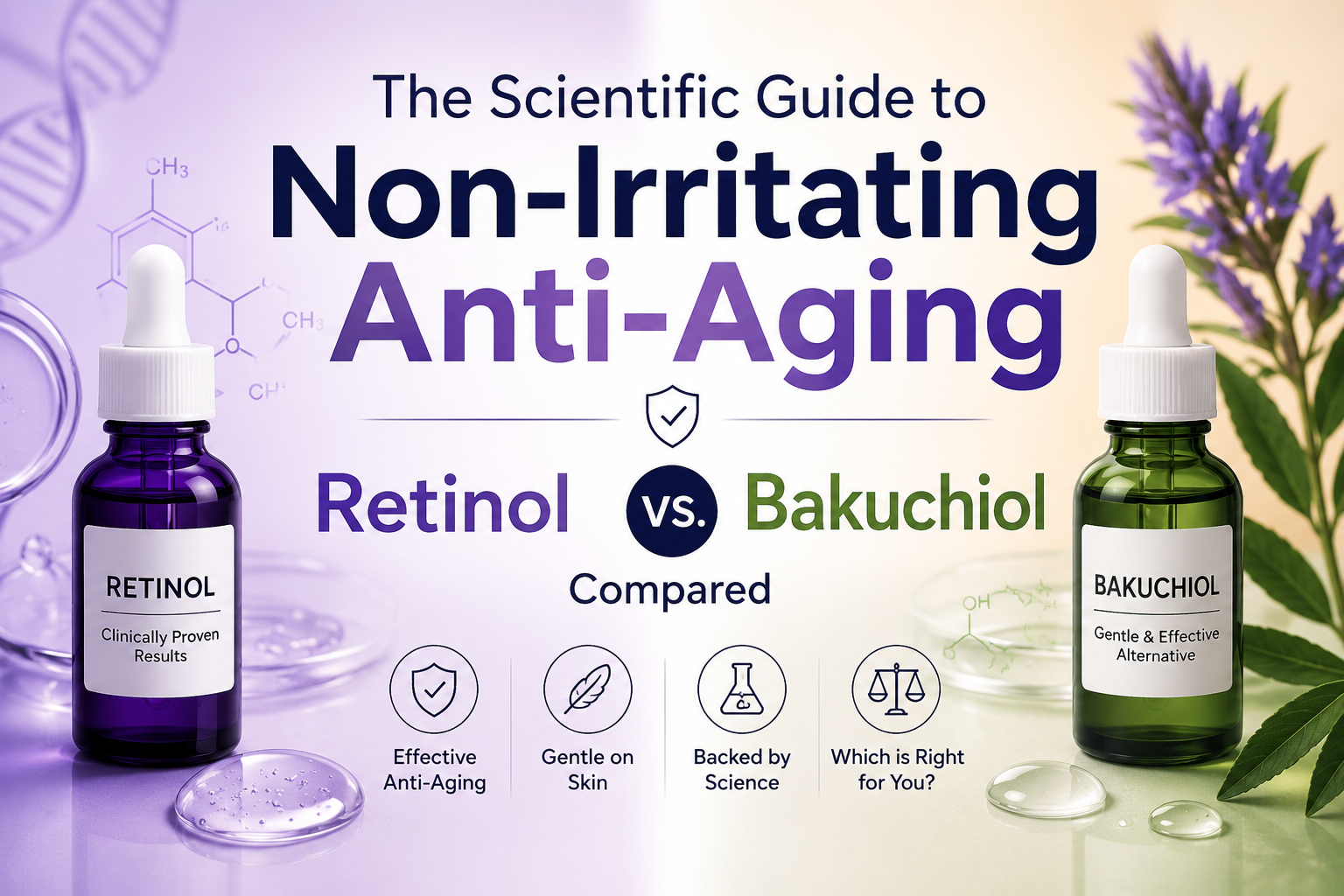
The Scientific Guide to Non-Irritating Anti-Aging: Retinol and Bakuchiol Compared
Executive Summary: For decades, retinol has reigned supreme in the realm of dermatological anti-aging. However, its well-documented side effects—ranging from erythema to barrier disruption—have alienated individuals with sensitive skin. Enter bakuchiol: a botanical compound structurally distinct from retinol but functionally analogous in its anti-aging efficacy. This column provides a scientific comparative analysis of both ingredients, offering a strategic framework for optimizing your skincare portfolio without the cost of irritation.
1. The Incumbent: The Mechanism and Limitations of Retinol
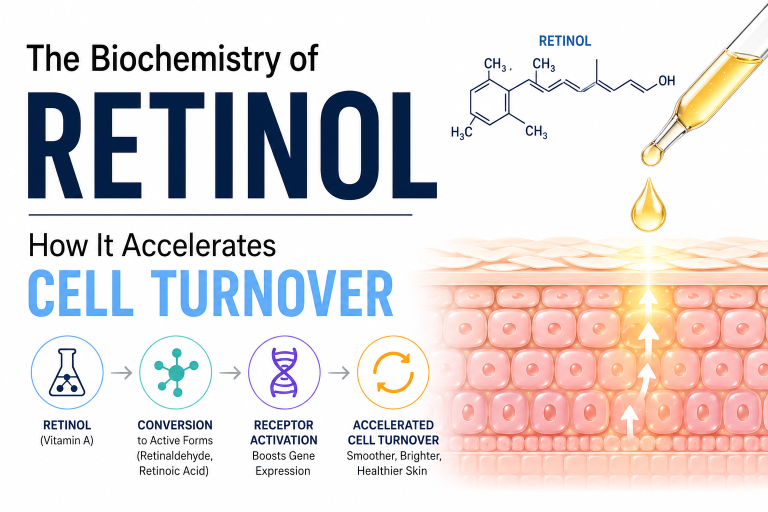
Retinol, a derivative of Vitamin A, is the most robustly researched over-the-counter anti-aging compound available today. Its efficacy is not a matter of marketing, but of cellular biology.
Once applied, retinol converts into retinoic acid, which binds to specific nuclear receptors (RARs and RXRs) in the skin. This triggers a cascade of biological effects:
- Accelerated Cell Turnover: It prompts the rapid shedding of dead keratinocytes, resulting in a smoother, more luminous epidermis.
- Collagen Synthesis: It stimulates fibroblasts in the dermis to increase the production of collagen and elastin, structurally reinforcing the skin and reducing the depth of fine lines.
The Drawback: The “Retinization” Period The very mechanism that makes retinol effective is also its Achilles’ heel. The forced acceleration of cellular turnover often outpaces the skin’s ability to produce essential lipids (ceramides), leading to a compromised skin barrier. This results in retinoid dermatitis—characterized by peeling, redness, stinging, and photosensitivity. For professionals who cannot afford visible skin flaking in daily meetings, this downtime is a significant liability.
2. The Challenger: The Science of Bakuchiol
Bakuchiol is a meroterpene extracted from the seeds of the Psoralea corylifolia (Babchi) plant, traditionally utilized in Ayurvedic and Eastern medicine.
For years, the cosmetic industry sought a “retinol alternative,” but most failed to deliver clinical results. Bakuchiol shifted this paradigm. While it bears no structural resemblance to retinoids, advanced genomic sequencing reveals that bakuchiol regulates the same key gene expression pathways as retinol.
- Functional Equivalence: Like retinol, bakuchiol upregulates the genes responsible for extracellular matrix production (collagen types I, III, and IV).
- Built-in Anti-Inflammatory: Unlike retinol, bakuchiol possesses intrinsic antioxidant and anti-inflammatory properties. It stabilizes the skin rather than irritating it, mitigating the enzymatic breakdown of collagen while protecting against oxidative stress.
3. Head-to-Head: Clinical Efficacy and Tolerability
The debate between the two compounds was largely settled by a landmark 2018 randomized, double-blind clinical trial published in the British Journal of Dermatology.
Over a 12-week period, participants were assigned either 0.5% retinol daily or 0.5% bakuchiol twice daily. The empirical findings were clear:
- Equal Anti-Aging Efficacy: Both groups experienced a statistically significant and highly comparable reduction in wrinkle surface area and hyperpigmentation.
- Superior Tolerability: The retinol group reported significantly higher instances of facial skin scaling and stinging. The bakuchiol group reported almost zero irritation.
Furthermore, because bakuchiol is photostable—meaning it does not degrade or cause heightened sensitivity upon UV exposure—it can be safely incorporated into a morning skincare regimen, a strategic advantage retinol lacks.
4. Strategic Integration: Which Protocol is Right for You?
Optimizing your anti-aging strategy requires aligning these active ingredients with your specific skin profile and lifestyle parameters.
Opt for Retinol If:
- Your skin barrier is highly resilient and accustomed to active acids.
- You are targeting severe, deeply entrenched signs of photoaging or acne scarring.
- You are willing to endure a 4-to-6 week acclimation period (retinization) and commit strictly to nighttime application.
Opt for Bakuchiol If:
- You possess sensitive, reactive skin, or conditions such as rosacea or eczema.
- You require a zero-downtime regimen with no visible flaking or redness.
- You are pregnant or breastfeeding (retinoids are strictly contraindicated during pregnancy, whereas bakuchiol remains a safe alternative).
- You prefer a streamlined routine that allows for twice-daily (AM/PM) application to maximize antioxidant protection.
Conclusion
The evolution of cosmetic chemistry has rendered the “no pain, no gain” philosophy of skincare obsolete. Retinol remains the undisputed gold standard for aggressive cellular regeneration. However, for professionals seeking maximum anti-aging efficacy with zero operational downtime, bakuchiol represents a scientifically validated, high-yield alternative. By understanding the biology behind these compounds, you can make a data-driven decision to preserve your skin’s longevity and health.