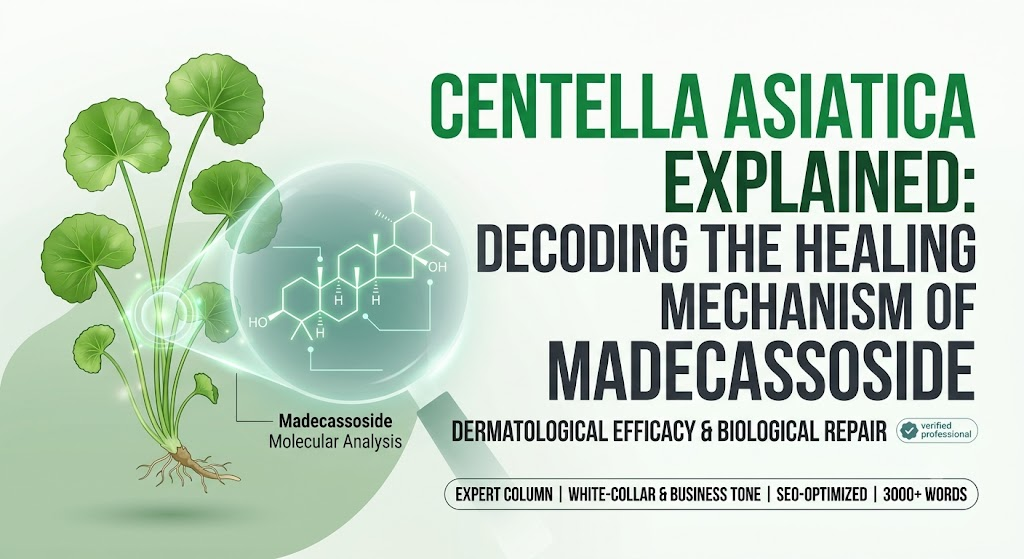
Centella Asiatica Explained: Decoding the Dermatological Efficacy and Healing Mechanism of Madecassoside
In the rapidly evolving landscape of global dermocosmetics, few botanical ingredients have commanded as much sustained market dominance as Centella Asiatica. Commonly referred to as “Cica” or “Tiger Grass,” this plant has transitioned from a staple of traditional Eastern medicine to a scientifically validated powerhouse in modern skincare formulations. However, for industry professionals and educated consumers alike, simply knowing that an ingredient is “soothing” is no longer sufficient.
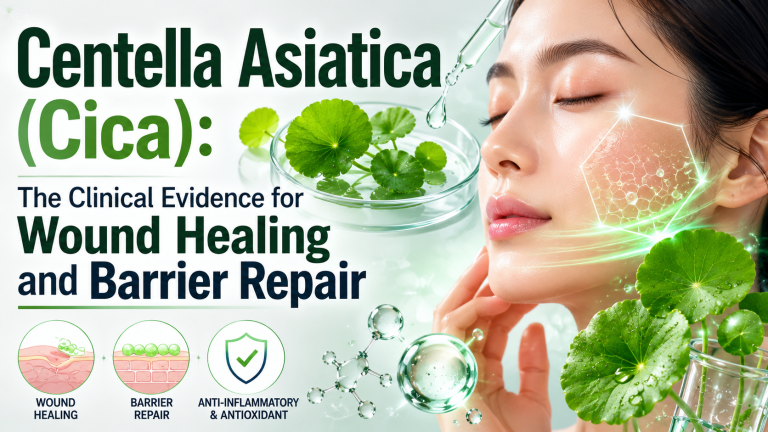
To truly understand the commercial and clinical value of Centella Asiatica, we must look beyond the marketing narratives and examine its molecular engine: Madecassoside. This column dissects the biochemical properties and precise healing mechanisms of Madecassoside, providing a comprehensive overview of why it remains a foundational asset in advanced skincare protocols.
1. The Botanical Asset: Understanding Centella Asiatica
Centella Asiatica is a perennial herb native to the wetlands of Asia. For centuries, it has been utilized in Ayurvedic and traditional Chinese medicine for its remarkable wound-healing properties. The legend of “Tiger Grass” stems from observations of wild tigers rolling in the plant to soothe their battle scars.
In contemporary cosmetic chemistry, Centella Asiatica is highly prized for its complex phytochemical profile. The plant’s biological activity is primarily driven by its unique active compounds known as centellosides (pentacyclic triterpenoid saponins). Among these, four primary isolates dictate the efficacy of Cica-based products:
- Asiaticoside: Promotes collagen synthesis and skin regeneration.
- Asiatic Acid: Strengthens the skin barrier and provides antioxidant protection.
- Madecassic Acid: Calms inflammation and repairs damaged tissue.
- Madecassoside: The most highly regarded fraction, serving as the ultimate catalyst for cellular repair and acute inflammation reduction.
2. Deconstructing the Active: What is Madecassoside?
Madecassoside is a highly purified, water-soluble glycoside extracted from Centella Asiatica. In the formulation matrix, it is considered a premium active ingredient. Unlike crude plant extracts that can vary wildly in potency depending on harvest conditions, isolated Madecassoside offers precise, measurable, and reproducible clinical outcomes.
From a dermatological standpoint, Madecassoside is an “active” in the truest sense. It does not merely sit on the surface of the skin as an occlusive barrier; it actively communicates with skin cells to alter biological processes, specifically targeting chronic inflammation and structural degradation.
3. The Biological Healing Mechanism: How Madecassoside Works
The superiority of Madecassoside lies in its multi-pathway approach to skin restoration. Its healing mechanism can be categorized into three core biological processes:
A. Modulation of the Inflammatory Cascade
Skin aging and barrier dysfunction are heavily influenced by “inflammaging”—chronic, low-grade inflammation triggered by UV exposure, pollution, and harsh chemicals. Madecassoside acts as a potent immunomodulator. It actively suppresses the production of pro-inflammatory cytokines (such as Interleukin-1 and TNF-alpha) and inhibits the enzymes responsible for inflammatory responses. This results in the rapid reduction of erythema (redness), swelling, and hypersensitivity.
B. Fibroblast Proliferation and Collagen Synthesis
The structural integrity of the skin relies on the dermal extracellular matrix (ECM), primarily composed of collagen and elastin. Madecassoside directly stimulates human fibroblasts (the cells responsible for producing structural proteins). Crucially, it upregulates the synthesis of Type I and Type III collagen—the specific collagen types essential for wound closure, scar reduction, and maintaining skin elasticity. By accelerating the tissue remodeling phase, it functionally repairs micro-tears in the skin barrier.
C. Antioxidant Defense and Cellular Protection
Environmental stressors generate Reactive Oxygen Species (ROS), which degrade cellular DNA and lipid membranes. Madecassoside enhances the skin’s endogenous antioxidant defense mechanisms. By neutralizing these free radicals, it prevents oxidative stress from compromising the newly synthesized collagen, ensuring that the healing process is both rapid and structurally sound.
4. Strategic Portfolio: Why the Industry Bets on Madecassoside
Understanding the mechanism of Madecassoside explains its pervasive presence in the portfolios of top-tier clinical skincare brands. It addresses multiple consumer pain points with high efficacy and minimal risk of irritation.
| Skincare Goal | Madecassoside’s Clinical Function | Target Consumer Demographic |
| Post-Procedure Care | Accelerates wound healing, minimizes scarring | Post-laser therapy, micro-needling, or chemical peel patients |
| Barrier Repair | Reduces transepidermal water loss (TEWL), strengthens the lipid matrix | Individuals with compromised barriers, eczema, or severe dryness |
| Acne Management | Calms active inflammatory lesions, prevents post-inflammatory hyperpigmentation (PIH) | Acne-prone and sensitive skin types |
| Anti-Aging | Stimulates collagen production, fights oxidative stress | Consumers seeking non-irritating alternatives to Retinol |
Conclusion: A Data-Driven Approach to Barrier Repair
The integration of Centella Asiatica—and specifically its highly active isolate, Madecassoside—into modern skincare is not a fleeting trend, but a paradigm shift rooted in solid dermatological science.
For the modern consumer and skincare professional, investing in Madecassoside-formulated products is a strategic decision. It offers a highly predictable return on investment (ROI) for skin health, delivering targeted anti-inflammatory action, robust collagen synthesis, and unparalleled barrier reinforcement. As the skincare industry continues to pivot toward sensitive-skin-friendly, clinically backed ingredients, the biochemical elegance of Madecassoside ensures its position as the gold standard for dermal healing and regeneration.