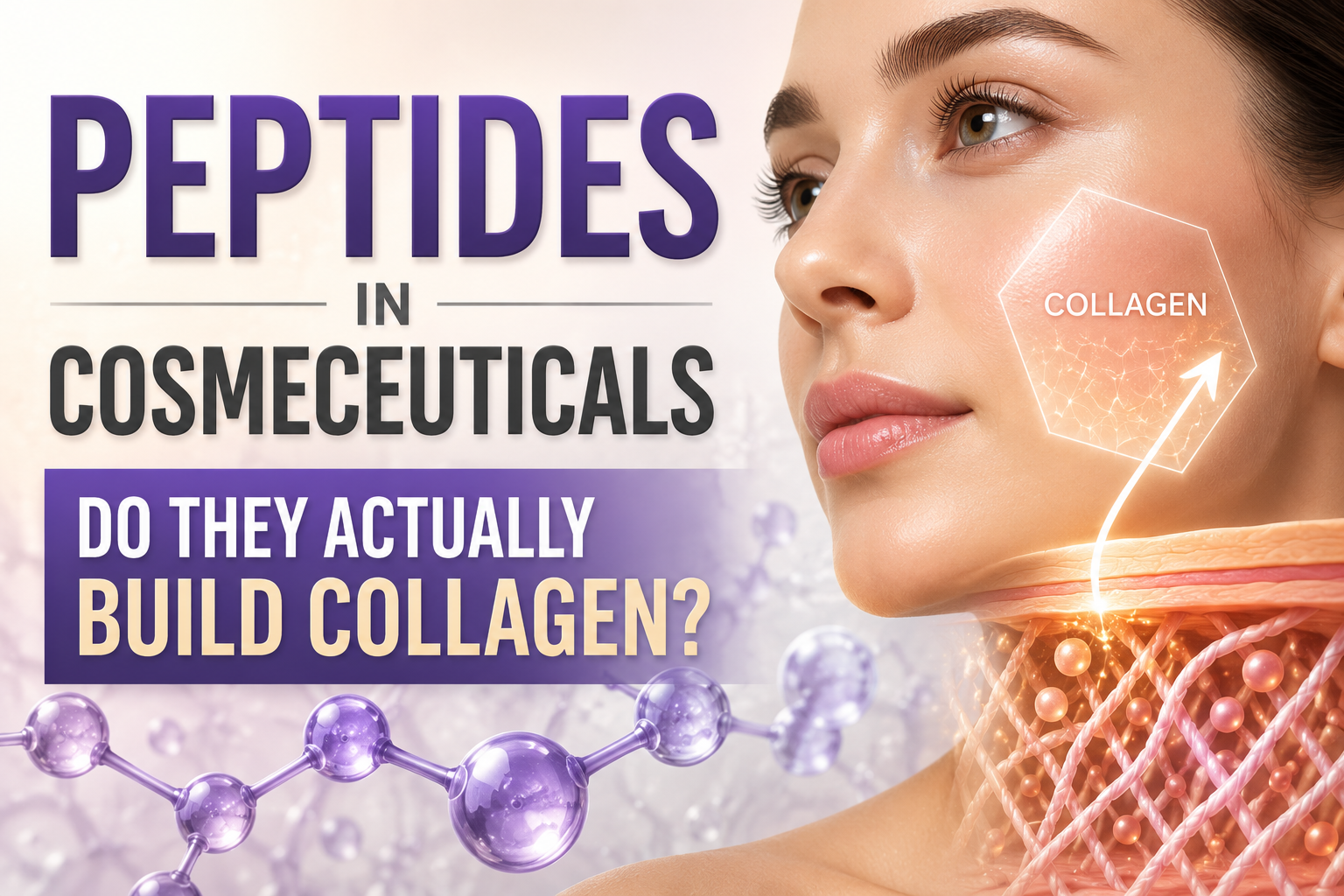
Peptides in Cosmeceuticals: Do They Actually Build Collagen?
Executive Summary
In the rapidly evolving landscape of anti-aging cosmeceuticals, peptides have emerged as a premier category of active ingredients, often marketed as a non-invasive alternative to clinical procedures. However, the commercial hype frequently outpaces the nuanced chemical reality. Do these microscopic protein fragments genuinely stimulate collagen synthesis, or are they simply an expensive marketing narrative? For dermatologists, formulation chemists, and discerning consumers, understanding the molecular mechanism, the barrier penetration challenges, and the specific typologies of peptides is crucial for evaluating their true return on investment in a skincare regimen.
The Biological Blueprint: Decoding Peptides
To evaluate their efficacy, one must first understand their biological foundation. Peptides are short chains of amino acids linked by peptide bonds. They are the fundamental building blocks of proteins in the human body, most notably collagen, elastin, and keratin—the structural pillars that give youthful skin its firmness and elasticity.
When collagen degrades due to intrinsic aging or extrinsic factors (such as UV radiation and oxidative stress), it breaks down into specific peptides. The cosmetic application of peptides operates on a principle of bio-mimicry: by topically applying these protein fragments, we aim to artificially trigger the skin’s natural repair mechanisms.
The Mechanism of Action: How Peptides “Talk” to the Skin
Not all peptides are created equal. In cosmeceutical formulations, peptides are categorized by their distinct biological functions. Understanding these categories is essential for identifying what a product can realistically achieve.
1. Signal Peptides (The Collagen Builders) These are the most prevalent peptides in anti-aging formulations (e.g., Palmitoyl Pentapeptide-4, widely known as Matrixyl). Signal peptides act as cellular messengers. When applied topically, they trick the skin’s fibroblasts into believing that collagen has naturally broken down and that an emergency repair response is required. This “false alarm” stimulates the fibroblasts to synthesize new collagen and elastin fibers, fundamentally redensifying the dermal matrix over time.
2. Carrier Peptides (The Enzymatic Catalysts) Carrier peptides stabilize and deliver trace minerals—most commonly copper—deep into the epidermis. Copper Peptides (GHK-Cu) are highly regarded in clinical settings for their dual-action capability: they promote wound healing and aggressively stimulate the production of both collagen and glycosaminoglycans (like hyaluronic acid), while simultaneously acting as potent antioxidants.
3. Neurotransmitter-Inhibiting Peptides (The “Botox-Lite” Approach) Ingredients like Argireline (Acetyl Hexapeptide-8) are engineered to intercept the chemical signals that cause facial muscles to contract. While they cannot replicate the profound paralysis of injectable botulinum toxin, they temporarily relax the micro-tension in the skin, softening the appearance of dynamic expression lines around the eyes and forehead.
The Bioavailability Hurdle: The Penetration Problem
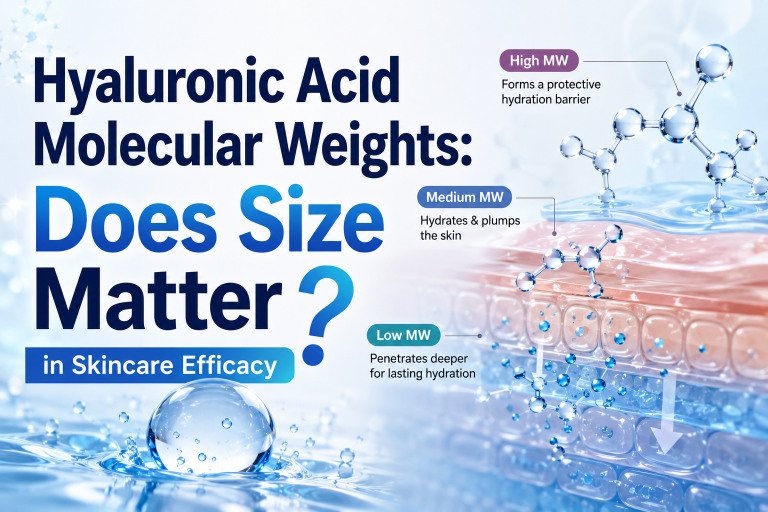
The primary skepticism surrounding topical peptides involves bioavailability. The human skin is biologically designed to keep foreign matter out. Because peptides are hydrophilic (water-loving) and often have a relatively large molecular weight, they struggle to bypass the lipid-rich stratum corneum (the skin’s outermost barrier).
If a peptide cannot reach the living cells of the lower epidermis and dermis, it cannot signal fibroblasts to produce collagen. It simply washes down the drain.
The Formulation Solution: To bridge this gap, sophisticated cosmetic chemists attach a fatty acid—typically palmitic acid—to the peptide chain. This process, known as palmitoylation, makes the peptide lipophilic (oil-loving), significantly enhancing its ability to penetrate the lipid barrier of the skin. When evaluating a peptide product, professionals look for these lipid-conjugated formulations to ensure the active ingredient actually reaches its target site.
Strategic Integration: Maximizing Peptide Efficacy
For peptides to deliver clinical results, they must be part of a well-architected skincare routine.
- Patience is a Prerequisite: Unlike chemical exfoliants (AHAs/BHAs) that offer immediate textural improvements, peptides work on a structural level. Measurable up-regulation of collagen takes a minimum of 8 to 12 weeks of consistent, daily application.
- The Synergistic Matrix: Peptides perform optimally in a supportive, hydrating environment. Formulations that combine peptides with barrier-repairing ceramides, hyaluronic acid, and antioxidants yield exponentially better results than isolated peptide serums.
- Alternative to Retinoids: For individuals with compromised skin barriers or conditions like rosacea who cannot tolerate prescription retinoids (tretinoin) or high-strength retinol, signal peptides offer a non-irritating, non-sensitizing alternative for long-term collagen stimulation.
Conclusion: The Bottom Line for Skincare Strategy
Do peptides actually build collagen? The scientific consensus is a highly qualified yes. When formulated correctly—utilizing lipophilic delivery systems and targeted signal or carrier molecules—peptides genuinely communicate with cellular receptors to rebuild the skin’s structural matrix. While they will not deliver the overnight cellular turnover of a retinoid, peptides represent a highly sophisticated, essential component of a comprehensive, long-term anti-aging strategy. For the educated consumer and the industry professional alike, investing in clinically backed peptide formulations is a scientifically sound decision for sustained dermal health.