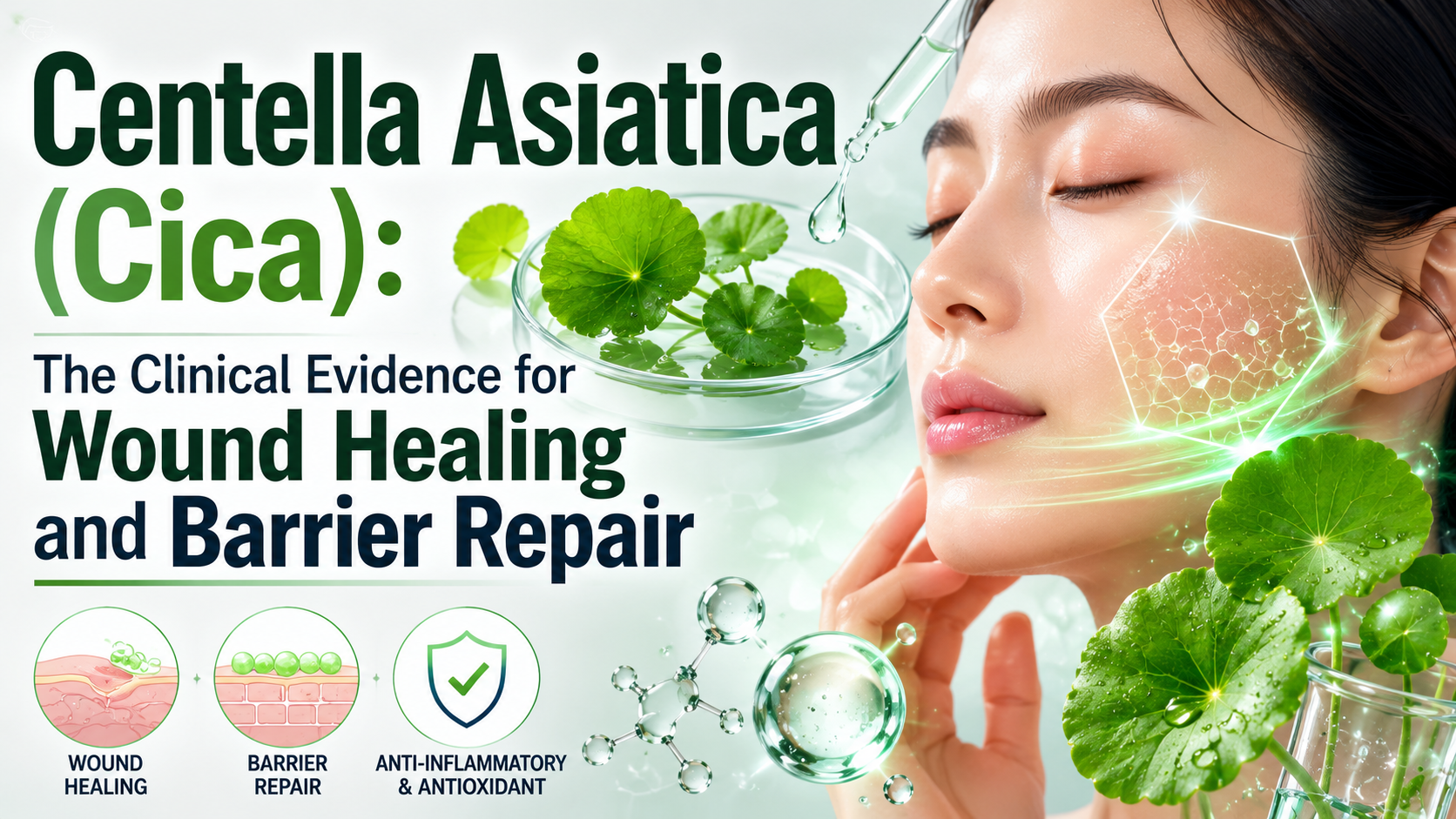
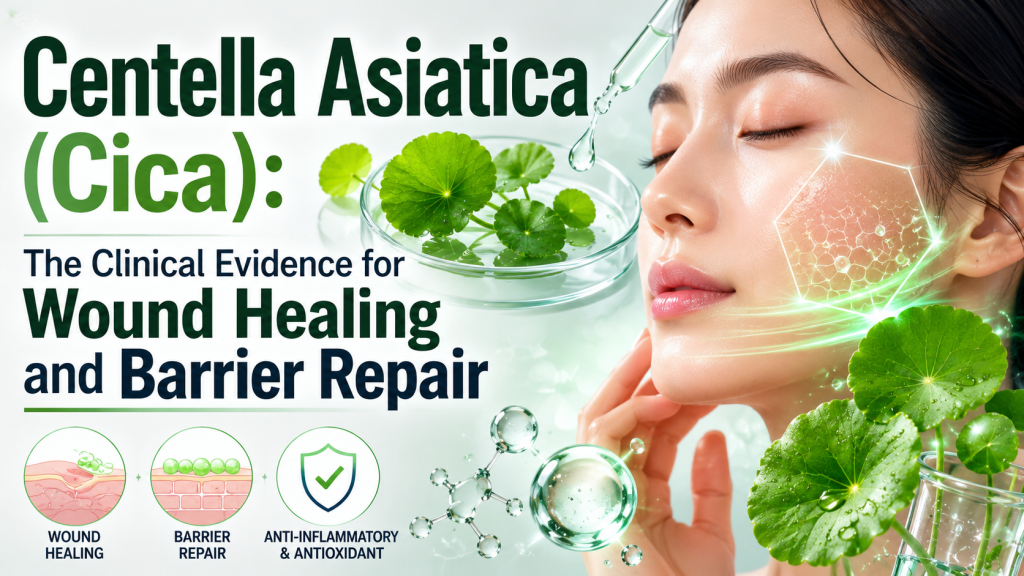
Centella Asiatica (Cica): The Clinical Evidence for Wound Healing and Barrier Repair
Executive Summary
In the competitive sphere of clinical skincare, botanical extracts often struggle to bridge the gap between traditional folklore and evidence-based dermatology. Centella Asiatica, colloquially known as “Cica” or “Tiger Grass,” is the rare exception. While its commercial explosion was catalyzed by the K-beauty sector, its enduring presence in premium cosmeceuticals is anchored in decades of robust pharmacological research. For dermatologists, formulators, and educated consumers, understanding the precise phytochemical mechanisms of Centella Asiatica is essential for treating compromised skin barriers, accelerating post-procedural recovery, and mitigating chronic inflammation.
Beyond the Folklore: The Phytochemistry of Cica
Historically utilized in Ayurvedic and traditional Chinese medicine to treat minor wounds and burns, Centella Asiatica’s efficacy is not anecdotal; it is chemically quantifiable. The therapeutic power of this botanical lies within its unique concentration of pentacyclic triterpenoid saponins.
To evaluate a Cica formulation’s clinical viability, one must look beyond the generic “Centella Asiatica Extract” label and identify its four primary active isolates:
- Asiaticoside: The primary catalyst for structural repair.
- Madecassoside: A potent anti-inflammatory and immunomodulatory agent.
- Asiatic Acid: Promotes cellular turnover and antioxidant defense.
- Madecassic Acid: Calms systemic epidermal stress and erythema.
When these four compounds are isolated and standardized—often referred to as TECA (Titrated Extract of Centella Asiatica)—they transform a simple soothing botanical into a clinical-grade wound-healing agent.
The Biological Mechanism of Wound Healing
How exactly does Centella Asiatica repair damaged tissue? The clinical evidence points to a sophisticated, multi-phase interaction with the skin’s biological healing cascade.
1. Fibroblast Proliferation and Collagen Synthesis The most critical phase of wound healing is tissue remodeling. Clinical studies demonstrate that Asiaticoside directly stimulates the proliferation of fibroblasts (the cells responsible for producing the skin’s structural framework). Furthermore, it specifically up-regulates the synthesis of Type I and Type III collagen. This accelerated collagen production bridges the dermal defect, closing wounds faster and increasing the tensile strength of the newly formed skin.
2. Angiogenesis (New Blood Vessel Formation) For a wound to heal, the damaged tissue must receive oxygen and nutrients. Centella Asiatica has been shown to promote angiogenesis at the wound site. By stimulating the microcirculation of the dermis, Cica ensures that cellular repair mechanisms are adequately fueled, significantly reducing recovery time for thermal burns, surgical incisions, and aggressive dermatological treatments.
3. Modulation of the Inflammatory Response Prolonged inflammation leads to scarring (fibrosis) and post-inflammatory hyperpigmentation (PIH). Madecassoside excels at intercepting the inflammatory cascade. It inhibits the release of pro-inflammatory cytokines, essentially “cooling down” the cellular environment. This makes it an invaluable asset for managing inflammatory skin conditions like acne vulgaris, rosacea, and atopic dermatitis.
Dermatological and Cosmeceutical Applications
The translation of this clinical data into daily skincare practice offers several high-value applications:
- Post-Procedural Recovery: Following invasive treatments such as fractional laser resurfacing, microneedling, or chemical peels, the skin barrier is intentionally compromised. TECA-formulated ointments accelerate re-epithelialization, mitigate transient erythema (redness), and prevent opportunistic infections by rapidly sealing the barrier.
- Acne Scar Mitigation: Because it modulates inflammation and regulates collagen production, applying high-concentration Cica to active acne lesions can minimize the severity of atrophic scarring and accelerate the fading of red, post-acne marks.
- Chronic Barrier Dysfunction: For individuals suffering from eczema or chronic epidermal water loss, Cica functions as a biological reinforcement, soothing micro-tears in the stratum corneum and restoring the skin’s defensive integrity.
The Formulation Imperative: Concentration Dictates Efficacy
For industry professionals, the inclusion of Centella Asiatica in a product brief must be heavily scrutinized. The cosmeceutical market is saturated with “fairy dusting”—products containing negligible amounts of dilute Cica water merely for marketing claims.
For genuine therapeutic wound healing, formulations must utilize highly purified, titrated extracts (like TECA) or explicitly list the isolated active compounds (Madecassoside, Asiaticoside) at clinically relevant percentages.
Conclusion: A Scientific Standard, Not a Trend
The commercial narrative surrounding Centella Asiatica often minimizes it as a simple “calming” ingredient for sensitive skin. However, the pharmacological reality is far more profound. Centella Asiatica is a potent, clinically validated dermal regenerator. As the skincare industry continues its pivot toward science-backed, barrier-focused formulations, Cica—when properly extracted and formulated—remains an indispensable tool for structurally repairing and fortifying the human epidermis.