Fragrance in Skincare: How Essential Oils Can Cause Contact Dermatitis
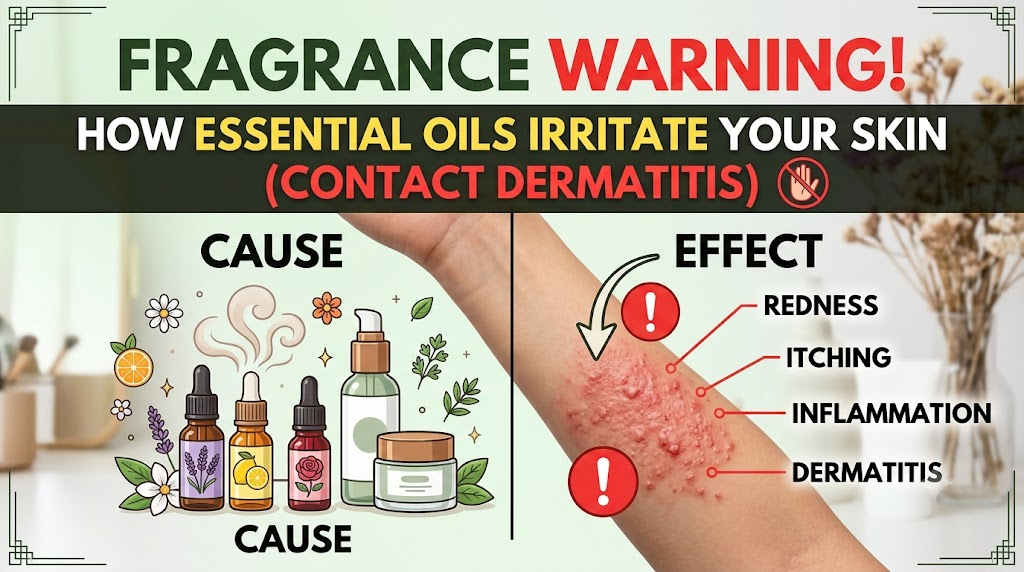
The sensory profile of a skincare product is a powerful driver of consumer purchasing behavior. The scent of a luxury cream or serum creates an immediate emotional connection, often interpreted by consumers as a marker of efficacy or premium quality.
To satisfy the modern demand for “natural” and “clean” cosmetics, many brands have systematically phased out synthetic fragrances, replacing them with essential oils (botanical extracts derived via distillation or cold-pressing).
However, from a clinical and chemical standpoint, the skin barrier does not differentiate between a synthetic aromatic molecule and a natural one. While marketed as therapeutic, essential oils contain highly volatile, complex mixtures of organic compounds that represent one of the leading causes of Allergic Contact Dermatitis (ACD) in dermatological practices worldwide.
This column examines the molecular chemistry behind essential-oil-induced contact dermatitis and outlines how the industry must balance sensory marketing with clinical safety.
1. The Chemical Anatomy of Essential Oils
To understand why essential oils trigger adverse skin reactions, one must move past the marketing term “natural” and analyze their molecular structures. An essential oil is not a single ingredient; it is a highly concentrated cocktail of up to hundreds of distinct Volatile Organic Compounds (VOCs).
These compounds primarily belong to two chemical families:
- Terpenes & Terpenoids: Limonene, Linalool, Pinene, and Geraniol.
- Phenylpropanoids: Eugenol and Cinnamaldehyde.
In nature, plants synthesize these secondary metabolites to serve as defense mechanisms against herbivores, pests, and microbial pathogens, or to attract pollinators. When applied to human skin at high concentrations or over prolonged periods, these exact same defense chemicals can compromise the epidermal barrier.
2. The Immunological Mechanism: Allergic Contact Dermatitis (ACD)
Adverse cutaneous reactions to fragrance generally fall into two categories: Irritant Contact Dermatitis (ICD) and Allergic Contact Dermatitis (ACD). While ICD is a non-immunological localized reaction caused by direct cellular damage, ACD is a sophisticated, T-cell-mediated Type IV delayed hypersensitivity reaction.
[Volatile Compound (Hapten)] ──► [Oxidation / Skin Protein Binding] ──► [Antigen Formation]
                                                                                │
[Severe Allergic Eczema / Flare-up] ◄── [T-Cell Memory Activation] ◄── [Immune Sensitization]
The Hapten-Protein Complex
Most fragrance allergens are micro-molecules called haptens (molecular weight <500 Daltons). Because of their tiny molecular size, they easily penetrate the stratum corneum. However, a hapten is too small to be recognized by the immune system on its own.
- The Binding Process: Once inside the epidermis, the hapten chemically binds to endogenous skin proteins. This new hapten-protein conjugate forms a complete antigen.
- The Sensitization Phase: Langerhans cells (antigen-presenting immune cells in the skin) engulf this complex and migrate to the local lymph nodes, presenting it to T-lymphocytes. This creates a pool of memory T-cells specifically programmed to detect that molecule.
- The Elicitation Phase: The initial exposure usually causes no visible reaction. However, upon re-exposure to the same essential oil, the newly sensitized memory T-cells rush to the site, unleashing an inflammatory cascade that manifests as severe eczema, erythema, swelling, and pruritus.
The Hidden Danger: Auto-Oxidation
A critical challenge in cosmetic chemistry is that many volatile compounds are relatively benign in their pure, unadulterated state, but become highly allergenic upon exposure to air and light.
Pure Linalool / Limonene+ Air / Light OxidationLinalool Hydroperoxides⟹Potent Sensitizers
When a consumer opens a skincare jar repeatedly, ambient oxygen transforms low-risk pre-haptens into hydroperoxides (true haptens). Consequently, a product that a consumer used safely for weeks can suddenly trigger a severe allergic reaction due to chemical degradation inside the packaging.
3. High-Risk Botanical Culprits in Sun Care and General Skincare
While thousands of essential oils are utilized globally, a select group is disproportionately responsible for driving clinical instances of contact dermatitis.
- Citrus Oils (Bergamot, Lemon, Lime, Orange): These oils are exceptionally high in Limonene. Beyond standard sensitization, citrus oils frequently contain Furanocoumarins (such as Bergapten), which trigger phototoxicity. When exposed to UVA light, these compounds undergo a photochemical reaction that causes hyperpigmentation and blistered burns resembling severe sunburn.
- Tea Tree Oil (Melaleuca alternifolia): Widely used in acne treatments for its antimicrobial properties. When oxidized, monoterpenes like α-terpinene break down into potent allergens, making aged tea tree oil a frequent culprit of sudden skin barrier failure.
- Lavender Oil (Lavandula angustifolia): Celebrated for its calming aroma, lavender oil contains high concentrations of Linalool and Linalyl acetate, two of the most thoroughly documented fragrance allergens in clinical dermatology.
4. Regulatory Frameworks and Brand Strategy
As consumer safety litigation rises, global regulatory bodies are tightening the rules surrounding fragrance and essential oil declaration.
| Metric | European Union (SCCS / EC) | United States (FDA / MoCRA) |
|---|---|---|
| Allergen Declaration | Mandatory to list 24+ specific allergens individually if above 0.001% (leave-on) | Expanding oversight via MoCRA; moving toward stricter allergen disclosures |
| Labeling Requirements | Cannot hide behind the generic term “Fragrance” or “Parfum” if allergens cross thresholds | Historically allowed generic “Fragrance” labeling, but shifting to transparency |
| Market Trend | High saturation of certified “Fragrance-Free” clinical brands | Rapidly growing consumer demand for fragrance-free/hypoallergenic formulas |
Navigating the EU Allergen Mandate
The European Union’s cosmetic regulation requires brands to explicitly list any of the designated cosmetic allergens (such as Linalool, Limonene, Citral, Geraniol, and Farnesol) on the ingredient deck if they exceed 0.001% in leave-on products (like moisturizers) or 0.01% in rinse-off products (like cleansers).
For brands leveraging essential oils, this creates a major marketing challenge: an organic serum formulated with natural lavender oil must explicitly list “Linalool” and “Limonene” at the bottom of its INCI deck, exposing the brand to scrutiny from increasingly ingredient-conscious consumers.
Conclusion: The Strategic Shift to Biocompatible Sensory Profiles
The scientific reality is undeniable: essential oils introduce considerable risk to the skin barrier without offering unique clinical benefits that cannot be delivered by safer, non-volatile synthetic alternatives or isolated, non-aromatic plant extracts.
For brand executives and product developers, the strategic path forward requires a reevaluation of the product development pipeline:
- Prioritize Clinical Integrity: Transition face-care portfolios—especially products targeting acne, rosacea, or compromised skin barriers—to completely Fragrance-Free and Essential Oil-Free architectures.
- Utilize Safe Alternatives: If a sensory experience is central to the brand’s identity, explore hydrosols (distilled plant waters with minimal volatile loads) or encapsulate volatile compounds to prevent direct epidermal contact and oxidation.
- Transparent Consumer Education: Educate consumers that a therapeutic scent does not equate to skin health.
Ultimately, true efficacy in modern skincare is measured by long-term barrier preservation. Brands that prioritize biocompatibility over volatile olfactory appeal will secure the trust, loyalty, and safety of an increasingly sophisticated global consumer base.