Waterless Beauty: Is Concentrated Skincare Actually More Effective?
Water has long been the undisputed foundation of the cosmetics industry. Flip over almost any premium serum or cream, and the first ingredient on the INCI list is invariably Aqua—often comprising 70% to 90% of the entire formulation. Historically, water served as a cost-effective solvent, a texturizer, and a vehicle to deliver water-soluble active ingredients.
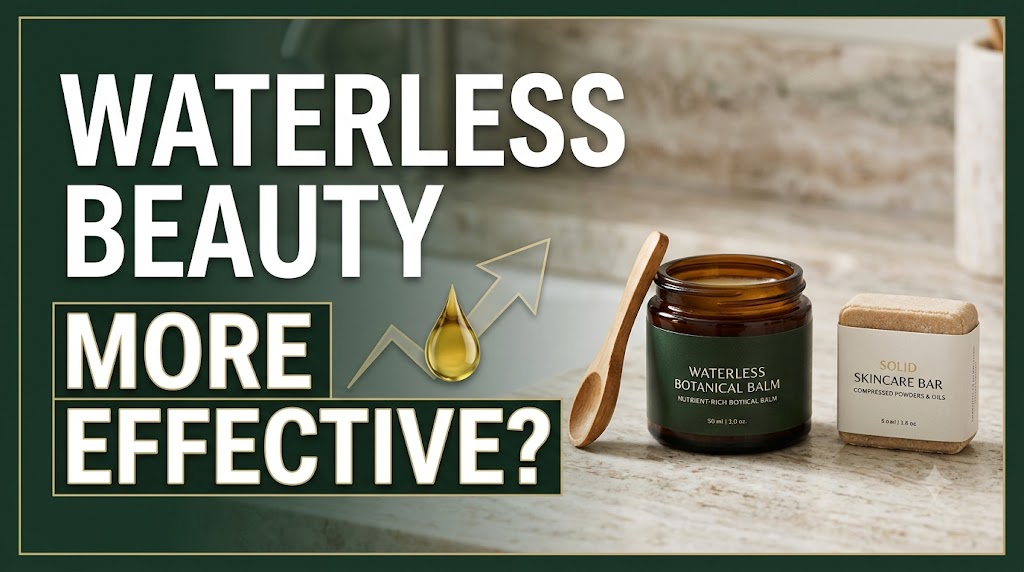
However, a major shift is occurring in cosmetic R&D. Driven by global sustainability mandates and a consumer base demanding maximum ingredient efficacy, Waterless (Anhydrous) Beauty has evolved from a niche eco-trend into a high-performance market segment.
This column investigates the formulation science behind waterless skincare, evaluating whether removing water genuinely increases product potency or if it is simply a clever marketing pivot.
1. The Anhydrous Architecture: Eliminating the Filler
In traditional skincare, water acts primarily as a filler and carrier. While it provides immediate, fleeting hydration to the skin’s surface, it evaporates quickly. Anhydrous formulations eliminate this component entirely, replacing it with botanical extracts, nutrient-dense oils, or converting the product into solid bars, balms, and powders.
[Traditional Emulsion] ──► [70-90% Aqua (Filler)] + [10-30% Actives & Preservatives]
[Anhydrous Formula]    ──► [100% Active Substrate] (Oils, Botanical Extracts, Powders)
From a chemical perspective, removing water dramatically shifts the active ingredient density. When a consumer purchases a waterless product, they are buying a 100% potent substrate. Every drop or grain delivered to the skin consists of biologically active compounds, emollients, or cellular communicators, theoretically offering a more potent dose per application.
2. Efficacy vs. Biophysics: Does Concentration Equal Performance?
To answer whether concentrated skincare is inherently more effective, we must look at how the skin barrier interacts with anhydrous systems. The answer is nuanced and depends on the specific formulation type.
The Potency Advantage: Stability of Oxidation-Prone Actives
Certain gold-standard skincare ingredients are notoriously unstable in the presence of water.
- The L-Ascorbic Acid (Vitamin C) Problem: In an aqueous environment, Vitamin C oxidizes rapidly, turning brown and losing its antioxidant capacity.
- The Waterless Solution: By formulating Vitamin C in an anhydrous silicone or oil base, or as a dry powder activated at the moment of use, the molecule remains stable at peak potency for months. For oxidation-prone actives like Retinol and Vitamin C, waterless systems are unquestionably more effective.
The Hydration Deficit: The Necessity of Water
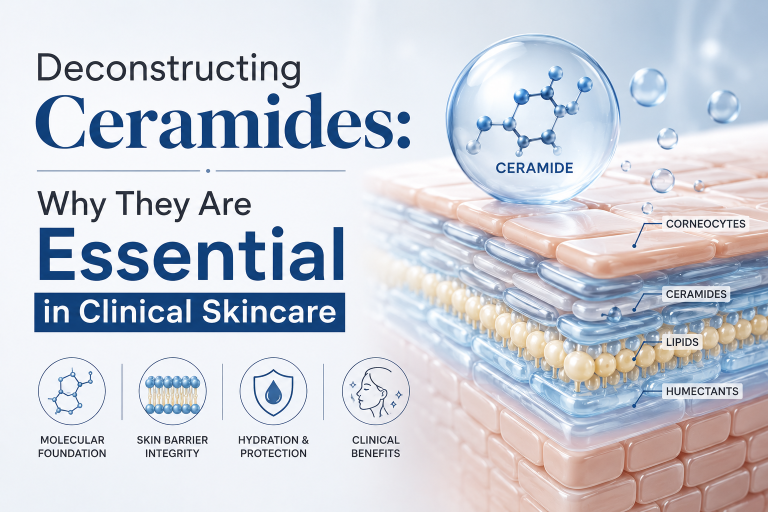
True skin health requires a balance of two elements: hydration (water content) and moisturization (lipid content).
Anhydrous oils and balms are exceptional at preventing Transepidermal Water Loss (TEWL) by sealing the skin barrier with an occlusive layer. However, they cannot introduce new moisture into the skin on their own.
The Scientific Consensus: For humectants like Hyaluronic Acid or Glycerin to plump the skin effectively, they must bind to water molecules. If a consumer applies a highly concentrated waterless oil to dehydrated skin without a water source, the product may seal the dryness in rather than fix it. Therefore, many advanced waterless products require “activation” with tap water during application to achieve full efficacy.
3. The Operational & Environmental Business Case
Beyond topical performance, the transition to concentrated skincare introduces massive logistical and chemical advantages that fundamentally optimize the beauty supply chain.
The Preservative Reduction
As established in cosmetic microbiology, water is the precursor to microbial contamination. The parameter known as water activity ($a_w$) dictates whether bacteria, mold, and yeast can proliferate.
$$\text{Traditional Emulsion: } a_w \approx 0.95 – 0.99 \implies \text{High Preservative Load Required}$$
$$\text{Anhydrous Formula: } a_w < 0.60 \implies \text{Minimal to No Preservatives Required}$$
Because anhydrous formulas have low water activity ($a_w < 0.60$), they are inherently hostile to microbial growth. This allows brands to minimize or completely eliminate traditional synthetic preservatives, a major selling point for the clean and sensitive-skin markets.
Supply Chain Efficiency
Shipping water globally is economically and environmentally inefficient. By removing water, products become significantly lighter and more compact. This allows brands to utilize smaller, plastic-free packaging, drastically reducing shipping weight, warehousing footprints, and overall carbon emissions per unit.
4. Strategic Comparison: Water-Based vs. Anhydrous Systems
| Strategic Metric | Water-Based Formulations | Waterless (Anhydrous) Formulations |
| Active Density | Diluted (typically 10%–30% active phase) | 100% potent substrate / highly concentrated |
| Active Ingredient Stability | Poor for vulnerable molecules (Vitamin C, Retinol) | Exceptional; shields actives from hydrolytic degradation |
| Skin Hydration (Water Delivery) | High; immediately delivers water to stratum corneum | Low on its own; requires external water activation |
| Preservative Requirements | High; non-negotiable broad-spectrum systems | Low to none; naturally hostile to pathogens |
| Sustainability Value | Low; high shipping weight, high plastic volume | High; reduced carbon footprint, minimal packaging |
Conclusion: The Strategic Verdict on Waterless Beauty
Is concentrated skincare actually more effective? From a molecular stability, preservative safety, and environmental standpoint, the answer is a definitive yes. Waterless skincare delivers a cleaner, more stable, and unadulterated dose of active ingredients to the skin barrier.
However, from a functional biophysical perspective, the skin still requires water to thrive. The future of this market segment does not lie in abandoning water entirely, but in shifting the burden of water delivery.
The most successful R&D pipelines are moving toward hybrid consumer-activated models: manufacturing highly concentrated anhydrous powders, bars, and oils that leverage the consumer’s own tap water at the point of application. For forward-thinking beauty brands, mastering this anhydrous architecture is the key to balancing clinical performance with sustainable corporate governance.