
Deconstructing Ceramides: Why They Are Essential in Clinical Skincare
In the modern landscape of high-performance skincare, consumer and clinical focus often gravitates toward potent, fast-acting active ingredients—prescription retinoids, alpha-hydroxy acids (AHAs), and highly concentrated antioxidants. However, deploying aggressive cellular communicators without fortifying the skin’s foundational infrastructure is akin to constructing a high-rise on a compromised foundation.
To achieve sustained dermatological health, we must shift our attention to the protective outer layer of the skin and the molecules that hold it together. Enter ceramides: the critical lipid class that dictates the resilience, hydration, and overall clinical appearance of the skin barrier.
Here is a comprehensive deconstruction of the biology of ceramides and why they are a non-negotiable asset in any sophisticated skincare portfolio.
The Biochemistry of the Skin Barrier: The “Brick and Mortar” Model
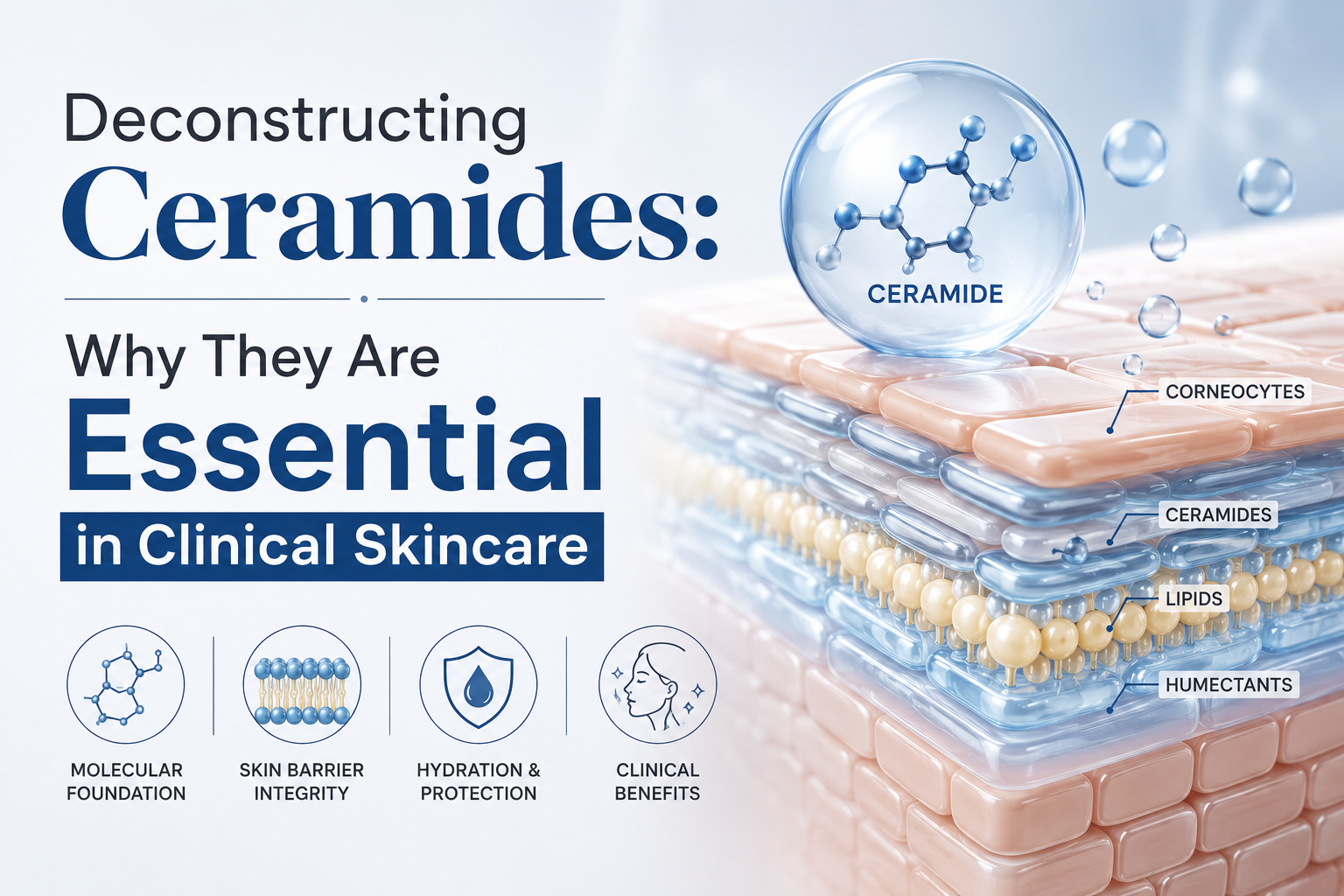
To understand ceramides, one must first understand the anatomy of the stratum corneum, the outermost layer of the epidermis. Dermatologists frequently rely on the “brick and mortar” analogy to explain this micro-structure:
- The Bricks: Corneocytes (dead, flattened skin cells) acting as the physical barrier.
- The Mortar: The intercellular lipid matrix that seals the space between the cells.
Ceramides are the primary component of this “mortar.” In healthy human skin, the lipid matrix is composed of approximately 50% ceramides, 25% cholesterol, and 15% free fatty acids. Together, they form a highly organized, impermeable lamellar structure.
When this lipid ratio is optimal, the skin is naturally equipped to defend against environmental pathogens, irritants, and oxidative stress. More importantly, ceramides trap moisture within the deeper layers of the tissue, preventing a phenomenon known as Transepidermal Water Loss (TEWL).
The Pathogenesis of Barrier Dysfunction
If ceramides naturally occur in the skin, why is topical supplementation necessary? The answer lies in the inevitable degradation of our lipid matrix caused by intrinsic aging and modern lifestyle factors.
For the modern professional, the skin is under constant siege. Chronic exposure to climate-controlled office environments (HVAC systems), frequent air travel, and high-stress levels heavily disrupt the skin’s moisture balance. Furthermore, ceramide production naturally decelerates by the time we reach our 30s.
When ceramide levels drop, the “mortar” degrades, leading to micro-cracks in the skin barrier. The clinical manifestations of ceramide deficiency include:
- Accelerated TEWL: Resulting in chronic dehydration, flakiness, and a dull, fatigued complexion.
- Increased Sensitivity: Irritants penetrate the compromised barrier, triggering erythema (redness) and inflammatory conditions like eczema or rosacea.
- Premature Aging: Dehydrated skin accentuates the depth and visibility of fine lines and mechanical wrinkles.
Strategic Efficacy: Why Topical Ceramides Work
Not all moisturizers are created equal. Traditional humectants (like hyaluronic acid or glycerin) draw water into the skin, while occlusives (like petrolatum) simply sit on top of the skin to block evaporation. Ceramides, however, are biomimetic.
Because they mimic the skin’s natural molecular structure, topical ceramides are readily recognized and integrated into the stratum corneum, actively repairing the lipid barrier rather than just masking dryness.
The Golden Ratio for Clinical Formulations
Clinical research dictates that for a ceramide product to be highly efficacious, it must not exist in a vacuum. The most advanced formulations replicate the natural biological balance of the skin using a 3:1:1 physiological ratio (Ceramides : Cholesterol : Free Fatty Acids). Formulations utilizing this precise ratio have been clinically proven to accelerate barrier recovery significantly faster than ceramides acting alone.
Integrating Ceramides into a Professional Regimen
Treating the skin requires a strategic, layered approach. Ceramides serve as the ultimate buffer and stabilizer, allowing you to maximize the return on your skincare investments.
- Synergy with Exfoliants and Retinoids: Chemical exfoliants (AHAs/BHAs) and retinoids accelerate cellular turnover but inherently stress the barrier. Applying a ceramide-dominant cream immediately after these powerful actives mitigates irritation, preventing the chronic inflammation that often forces patients to abandon their treatments.
- Post-Procedural Healing: Following in-office clinical procedures such as chemical peels, microneedling, or laser resurfacing, the skin barrier is intentionally compromised. Ceramides are universally prescribed in post-care protocols to reconstruct the stratum corneum and minimize downtime.
- Daily Defense: For individuals dealing with long-haul flights or dry corporate environments, a daily application of a ceramide-rich barrier cream is a prophylactic measure against environmental degradation.
The Bottom Line
In clinical dermatology, repairing the barrier is the prerequisite to resolving virtually every other aesthetic concern. You cannot treat hyperpigmentation, acne, or intrinsic aging effectively if the skin is in a chronic state of inflammation and dehydration.
Ceramides are not a fleeting industry trend; they are deeply rooted in human biology. By prioritizing barrier support and strategically integrating ceramide formulations into your daily regimen, you ensure that your skin remains resilient, hydrated, and functionally optimized against the demands of a high-performance lifestyle.